Custom safety nets: options, finishes and configurations available from Visor Fall Arrest Nets

In this article we explain the five available configurations, what each one is designed for, and how to choose the right combination based on the type of work, the environment and the level of risk your site is exposed to.
⟩ Why not all safety nets are the same
A basic safety net does its main job: catching a falling person. But the real risks on a construction site go well beyond a fall. A single working area may involve tools, debris, airborne particles and, in certain interventions, hazardous materials such as asbestos that must not be released into the surroundings.
That is why, instead of offering a single product, we work with a modular system: the client can purchase the net on its own or configure it with one or several technical finishes depending on what needs to be contained.
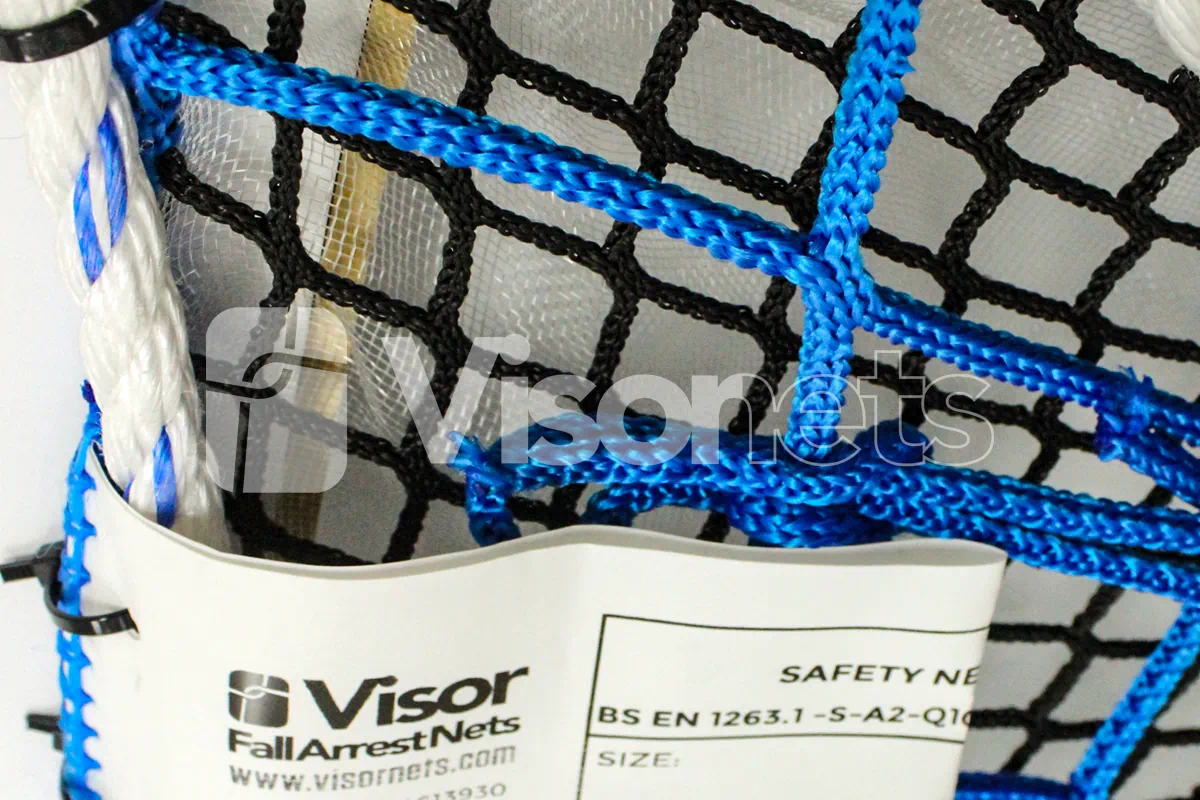
Close-up of custom safety net with white debris netting
⟩ Available configurations: choose the safety net your site actually needs
Visornets custom safety nets can be built with one, two or three layers. The variants are formed by combining three types of mesh: the main fall arrest net, a secondary retention mesh (debris netting or tools system) and a containment membrane when the application demands it.
1. Safety net in basic configuration
This is the standard option and the starting point of the whole system. It is the recommended choice when the main risk is the fall of people and heavy elements, without loose tools or airborne particles being critical factors.
2. Nets with debris netting: full or as a skirt
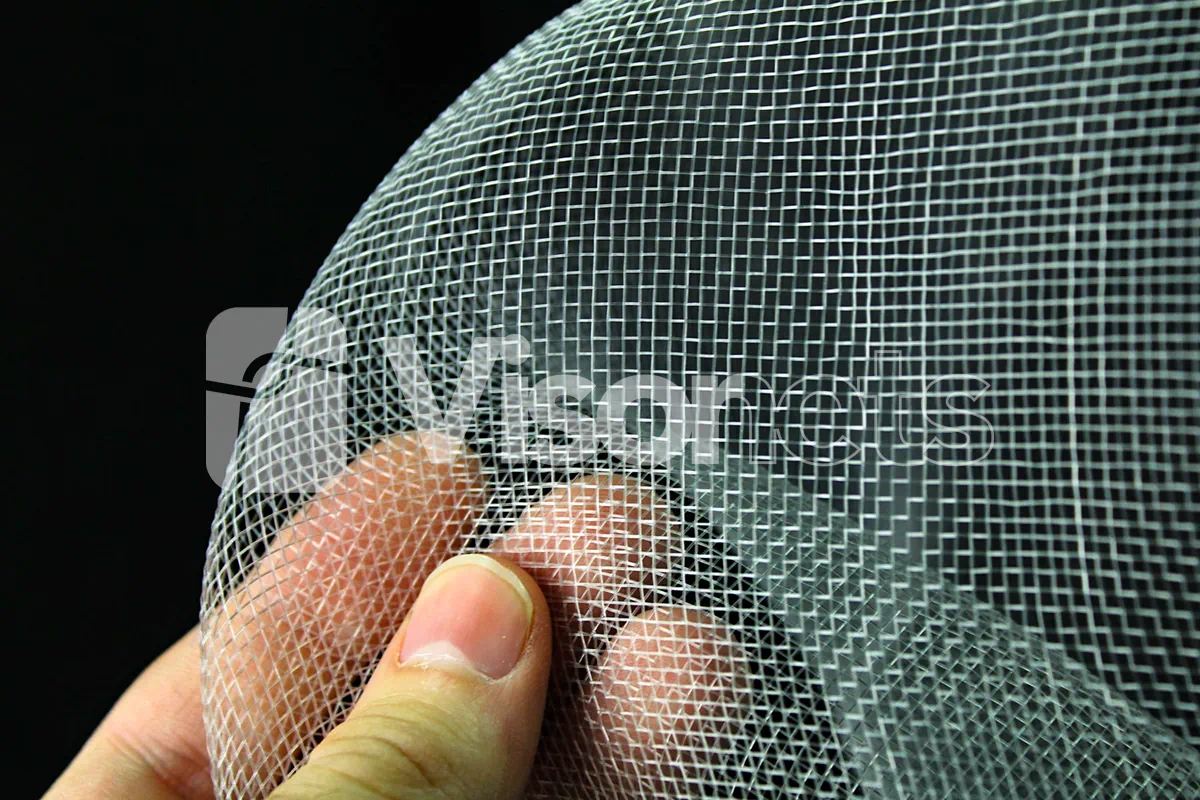
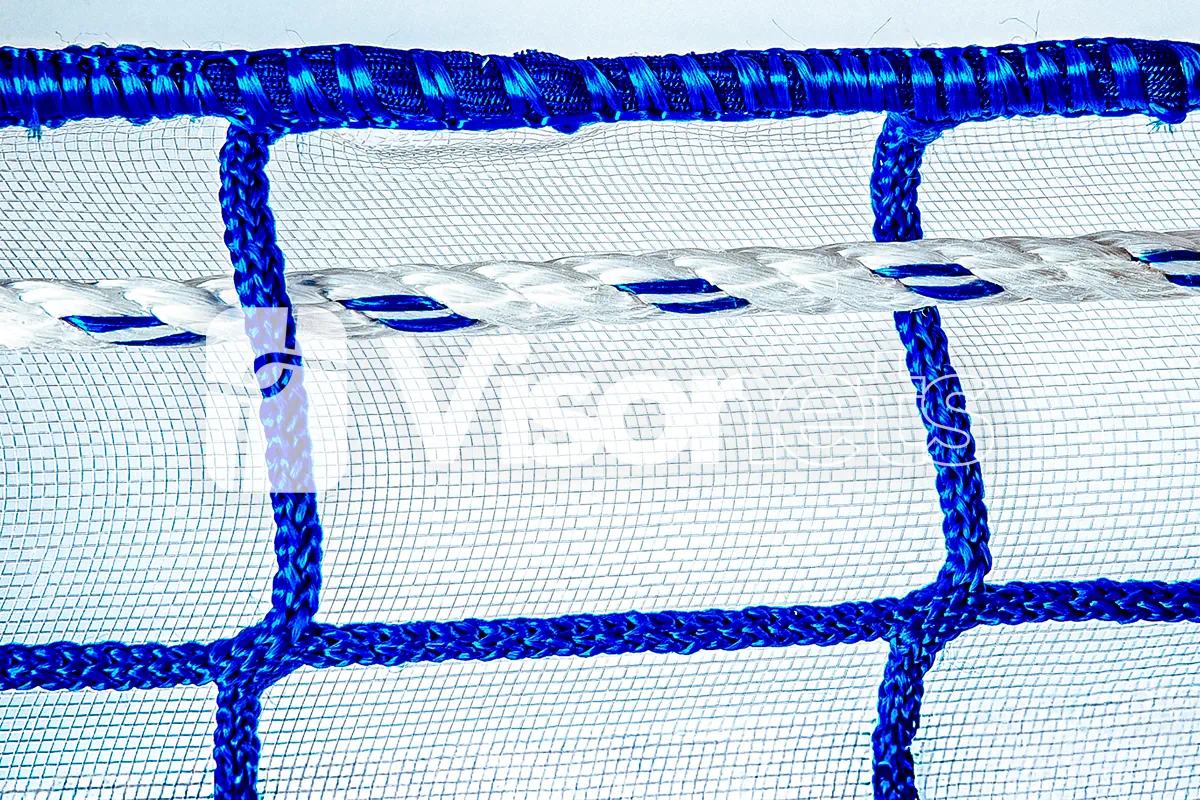
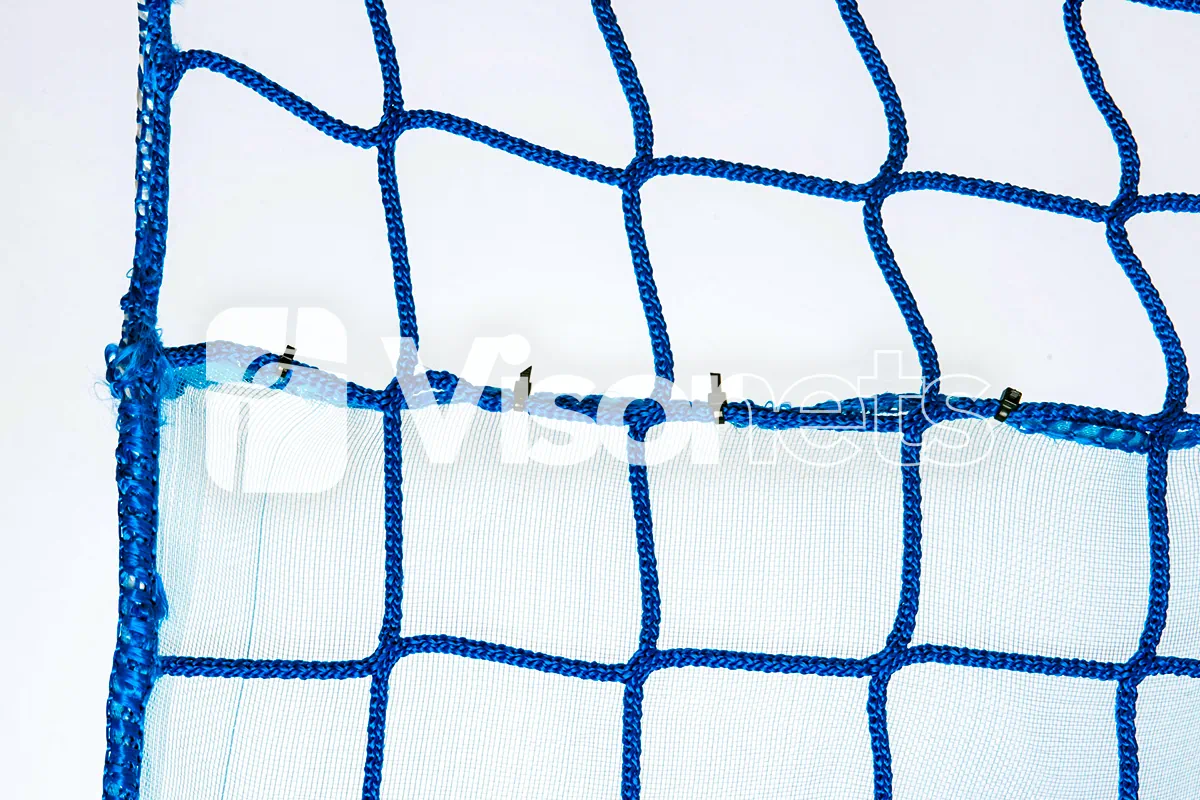
One of the most frequently requested configurations. This finish adds a debris netting mesh with a smaller aperture, specifically designed to retain small objects, debris and chunks that would otherwise pass through the main net.
Two variants are available depending on how much surface needs to be covered:
Both variants become essential whenever there is a risk of screws, debris or small chunks falling onto people or adjacent property.
3. Nets with the tools system: anti-tools and anti-object protection
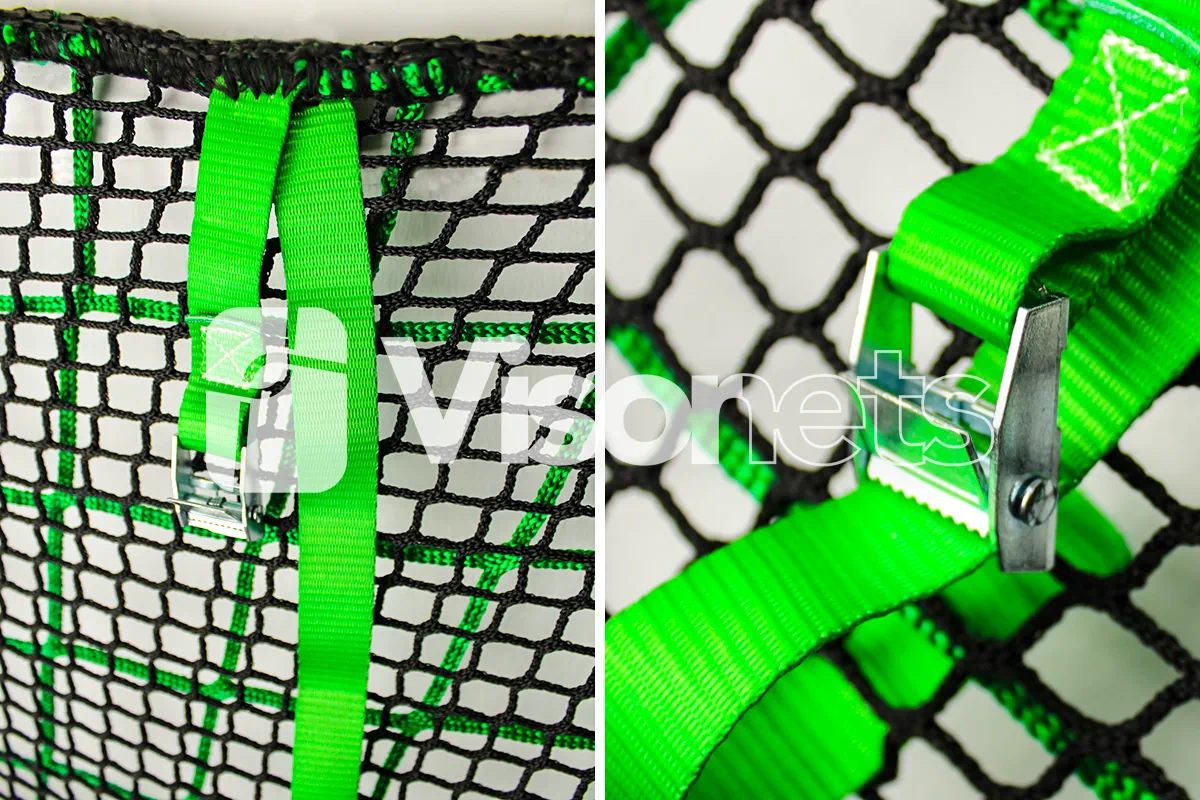
When risk levels rise, especially in technical or industrial work, the tools system comes into play. While debris netting is designed for small particles and objects, the tools system is built to retain heavier elements such as hand tools and larger chunks.
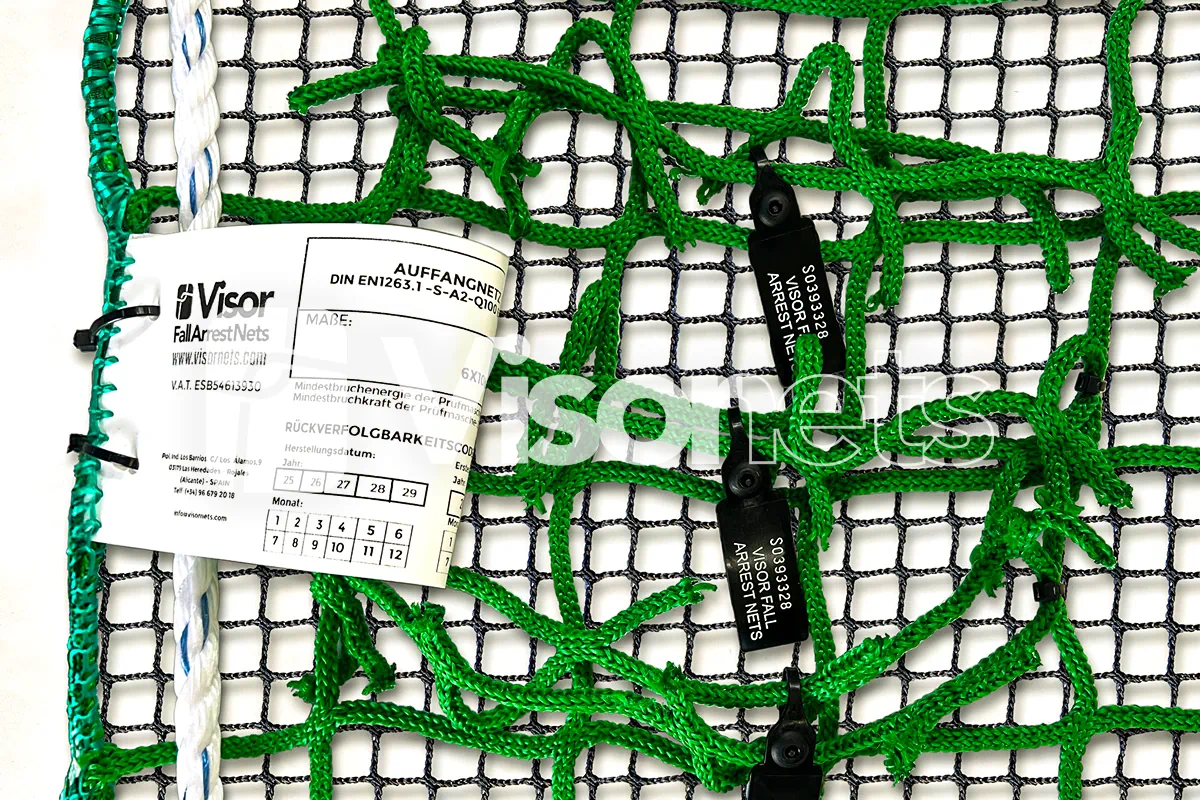
Real applications of the tools system
This configuration is particularly useful for:
4. Nets with plastic membrane for asbestos removal
In refurbishment and demolition projects a different risk comes to the fore: environmental contamination. Asbestos and other hazardous materials disperse easily if they are not properly contained, putting workers, adjacent buildings and third parties at risk.
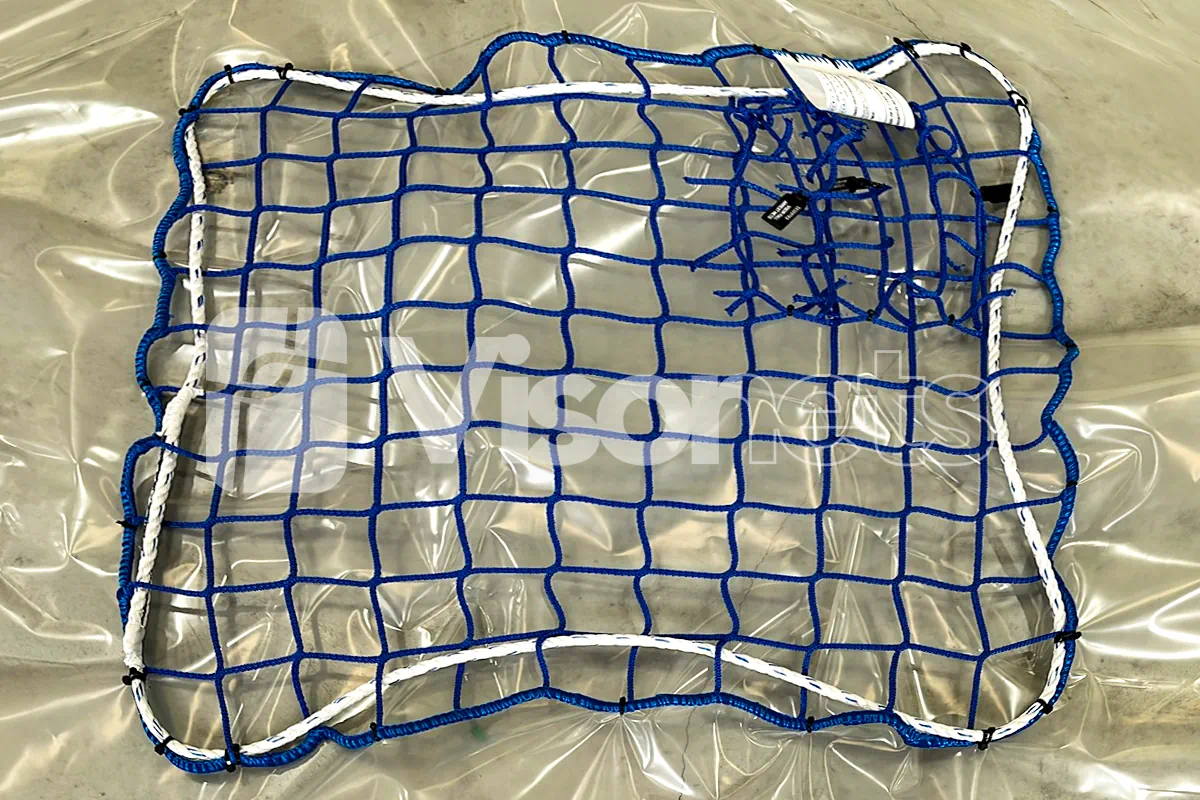
Our solution is a safety net fitted with a polyethylene plastic membrane, creating a sealed containment barrier over the fall arrest net itself.
It is an essential solution for controlled demolitions, industrial refurbishment and any intervention where material containment is as critical as fall protection itself.
5. Triple-layer safety nets: combined maximum-level protection
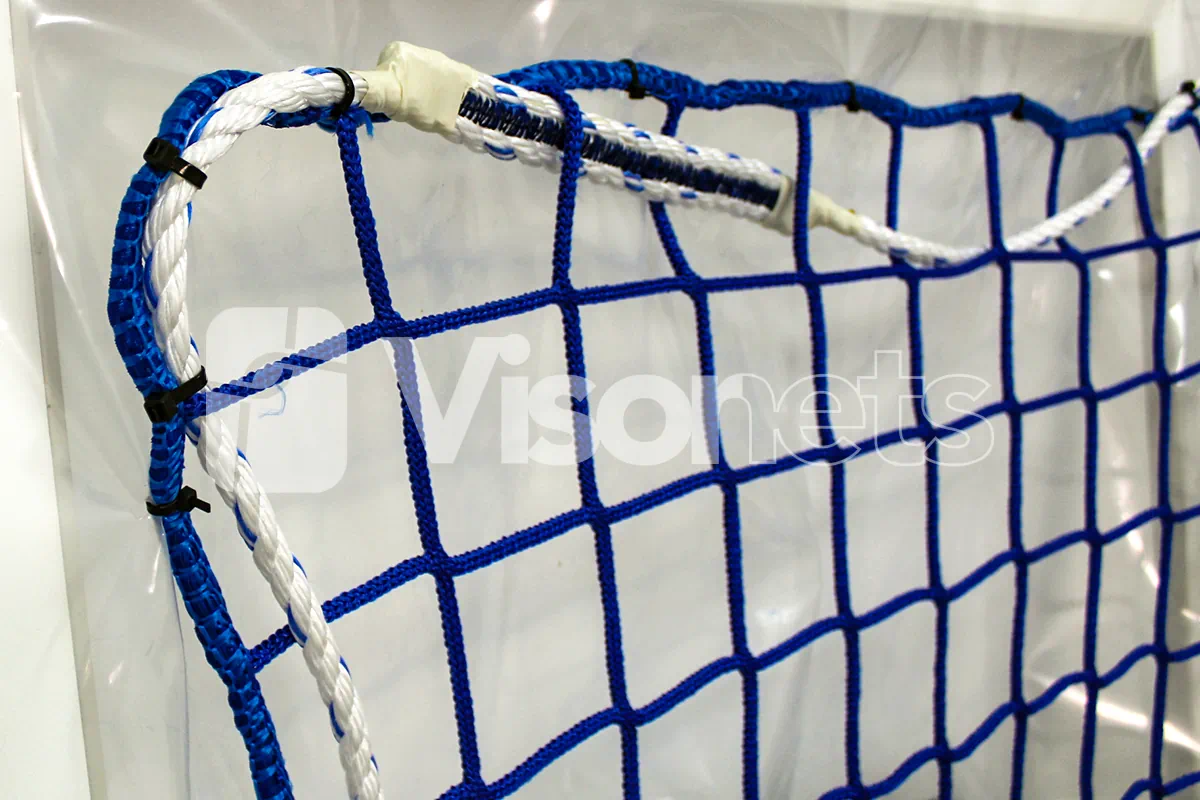
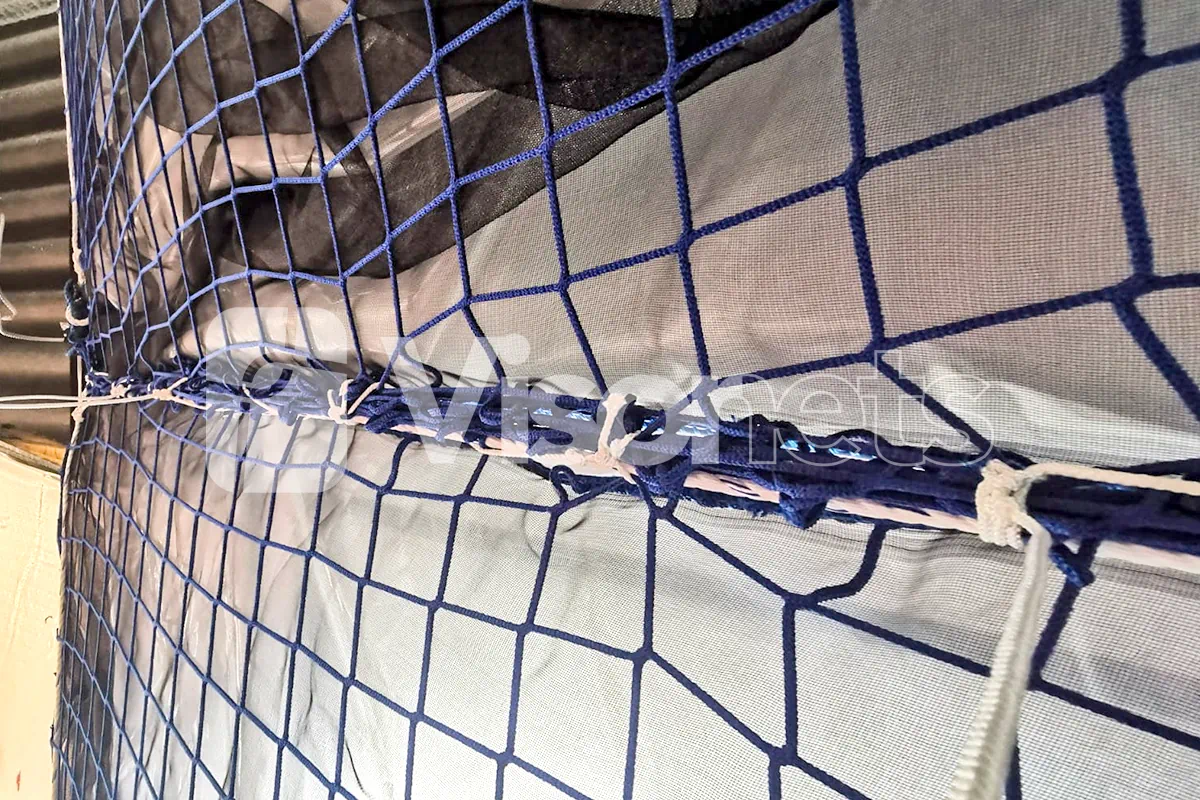
The most complete configuration of all. The triple-layer system answers a need that appears in many projects: the simultaneous coverage of three types of risk — falling people, falling objects or tools, and the dispersion of particles or contaminants.
How the triple-layer system is built
Advantages of the triple-layer system
⟩ How to choose the right safety net configuration
The right choice does not depend on budget: it depends on a proper risk assessment of your site. Three axes help you decide which configuration best matches what you need to protect.
Based on the type of work
Based on the site environment
Based on the level of risk
Site safety demands more than an off-the-shelf answer: it demands a custom safety net built with the layers required to protect people, materials and the surrounding environment.
Related posts
Facade safety nets with toe board: Complete protection at height
Facade safety nets with toe board from Visor Fall Arrest Nets strengthen collective protection for work at height and help…
New Visornets UK Logistics hub and warehouse facility
We are pleased to announce the official opening of our new Visornets UK logistics hub and warehouse facility. This strategic…
Questions and answers about working at height
For your quick reference, we've provided a series of questions and answers about working at heights and their implications for…
Safety Net Type S on the roof
Safety Net Type S on the roof, is a type of collective safety net, certified according to the UNE EN-1263-1…
Horizontal nets disassembly process
Horizontal nets disassembly process must be carried out with precision and care to ensure the safety of workers and the…
How to install safety net for horizontal use
Install safety net for horizontal use is a crucial part in the operator protection. Proper installation minimizes the risk of…